Recovery, the Macedonian Struggle and the Cretan Question
Recovery after 1897, the Macedonian Struggle and Crete’s path towards union.
Audio will be added after final production.
In this episode
Recovery after 1897, the Macedonian Struggle and Crete’s path towards union.
Full transcript
The complete English transcript of this episode is available to read.
ProjectGreece.
The History of Greece, from 1800 to today.
A twenty-part series recounting the journey of modern Greece with sobriety, composure, and documentation.
Seventh episode.
1898–1908: Reorganisation, the Macedonian Struggle, and the Cretan Question.
Welcome to another episode of the series "The History of Greece, from 1800 to today."
In the previous episode, we reached the end of 1897. Greece had experienced financial bankruptcy, the intensity of the competition between Charilaos Trikoupis and Theodoros Diligiannis, and, ultimately, a swift military defeat in the Greco-Turkish War. We left the country in a state of military disorganisation, burdened by war reparations, and suffering from a profound crisis of confidence in the state and its political leadership.
We are now in 1898. George I remains "King of the Hellenes" and Alexandros Zaimis is at the head of the government. The next decade is not a straightforward path of recovery. It is a period of fiscal supervision, limited reforms, social tensions, and armed conflicts beyond the borders of the Greek state.
Peace with the Ottoman Empire was signed in December 1897. Greece was forced to pay significant war reparations and accepted minor border losses in Thessaly. To ensure the payment of reparations and the servicing of old loans, the International Committee of Control, commonly known as the International Financial Control, was established in 1898.
Specific state revenues were committed to this control, including receipts from monopolies, stamp duties, tobacco, and customs. The arrangement effectively limited the country's fiscal autonomy and was experienced by many as a continuation of the defeat. At the same time, it allowed for new guaranteed borrowing and contributed to stricter management. These two aspects do not negate one another: it was both external supervision and a mechanism for stabilising public finances.
In the same year, the crisis in Crete changed the status of the island. In August 1898, violence in Heraklion caused the deaths of Christian inhabitants and British soldiers. Sources do not agree on a reliable total number of victims. International reaction accelerated the departure of Ottoman troops.
In December, Prince George, son of the King of Greece, arrived in Crete as High Commissioner under the mandate of Great Britain, France, Russia, and Italy. The autonomous Cretan State was established, under the suzerainty of the Sultan and the international protection of the four Powers. Crete had not yet been united with Greece, and the Prince did not act as a Greek administrator of annexed territory.
In 1899, a Cretan Assembly was elected and a Constitution was drafted. Administration, justice, a gendarmerie, currency, and other institutions of the autonomous state were created. Christians and Muslims participated in the representation, albeit within a society that had gone through revolutions, massacres, displacements, and a major exodus of Muslim inhabitants. The new state brought order and institutional reorganisation, but not automatic reconciliation.
The regime had a permanent ambiguity. The High Commissioner exercised extensive powers and was appointed by the Powers, while the flag and the institutions of the State declared autonomy. The Sultan retained formal suzerainty, and the Greek government had no legal authority on the island. For many Cretan Christians, however, autonomy was considered a temporary stop on the way to Enosis (Union). For the Muslim community and the Sublime Porte, the same prospect generated the fear of renewed insecurity and displacement.
In Greece, the elections of February 1899 brought Georgios Theotokis to power. His government attempted to restore finances and reorganise the army without having unlimited resources at its disposal. The currant crisis particularly pressured the western and northern Peloponnese. The Currant Bank and interventions in the distribution of production limited certain consequences but did not solve the problem of overproduction and the debts of the growers.
A growing outlet was emigration, mainly to the United States. Not everyone left for permanent settlement, nor did all families come from the same regions. However, at the dawn of the twentieth century, the departure of young men, the sending of remittances, and the return of migrants began to noticeably alter the agricultural economy and daily life.
The economic picture was not only one of crisis. After 1898, several state budgets showed a surplus, foreign trade improved, and shipping, together with remittances, provided valuable foreign exchange. However, the improvement was uneven. For an over-indebted currant grower, the fiscal stabilisation of Athens did not necessarily mean higher income or access to cheap credit.
In 1901, the publication of a translation of the Gospels into a language closer to the vernacular provoked fierce reactions. Students, ecclesiastical, and political figures treated the translation not only as a religious matter but also as a national one. The demonstrations in Athens ended in clashes with dead and wounded. Precise tallies differ according to source and category of victim.
The "Evangelika" (Gospel Riots) led to the fall of the Theotokis government in November. He was succeeded by Alexandros Zaimis. The linguistic dispute revealed a wider rift: which language expressed the nation, who controlled education, and what relationship should modern society have with its ancient and religious heritage?
The elections of November 1902 did not provide a clear solution. The forces of Theotokis and Diligiannis appeared roughly equal, while smaller groups led by Zaimis and Dimitrios Rallis could influence the majorities. Diligiannis formed a government.
During the same period, Ottoman Macedonia was at the centre of competing national projects. Its population was complex: Muslim communities, Greek-speakers, Slavic-speakers, Vlach-speakers, Albanian-speakers, Jewish communities, and other groups coexisted in cities and villages. Language, religious affiliation, local identity, and national choice did not always coincide.
From the late nineteenth century, the Ecumenical Patriarchate of Constantinople and the Bulgarian Exarchate competed for churches, schools, and communities. The Internal Macedonian Revolutionary Organization sought political change and developed armed networks. Other Bulgarian, Serbian, Greek, and Romanian organisations promoted their own goals. The inhabitants were not mere numbers on ethnographic maps; they often adapted to the pressures, kinships, and armed correlation of forces in each area.
On 20 July 1903 (Old Style), or 2 August (New Style), the Ilinden Uprising broke out. It was mainly organised by the Internal Organization and was directed against Ottoman authority. Ottoman suppression was harsh: villages were destroyed and thousands of inhabitants were displaced. The numbers of the dead, refugees, and destroyed settlements diverge significantly and should not be merged into a certain count.
In the autumn, Austria-Hungary and Russia promoted the Mürzsteg reform programme. Foreign political agents and officers assumed a supervisory role without abolishing Ottoman sovereignty. The reforms sought security and administrative changes, but they were implemented fragmentarily and did not end the activities of the armed bands.
In November 1903, the "Oresteia Riots" broke out, following the presentation of Aeschylus' Oresteia in translation at the Royal Theatre. Again, language was linked to fears regarding national identity and to the conflict between reformers and defenders of the Katharevousa (purist) language. The violence could not be explained as a simple philological disagreement. In politics, after Diligiannis, there followed within the same year a short-lived Theotokis government, a Rallis government, and, in December, a new Theotokis government.
In Athens, a Macedonian Committee was formed in 1904, while Greek consulates, clergy, teachers, and local networks strengthened the Greek organisation. Officers and volunteers crossed the borders secretly using pseudonyms and formal leave or resignations. The Greek government avoided an official declaration of war, but state officials and non-state actors provided coordination, money, weapons, and information.
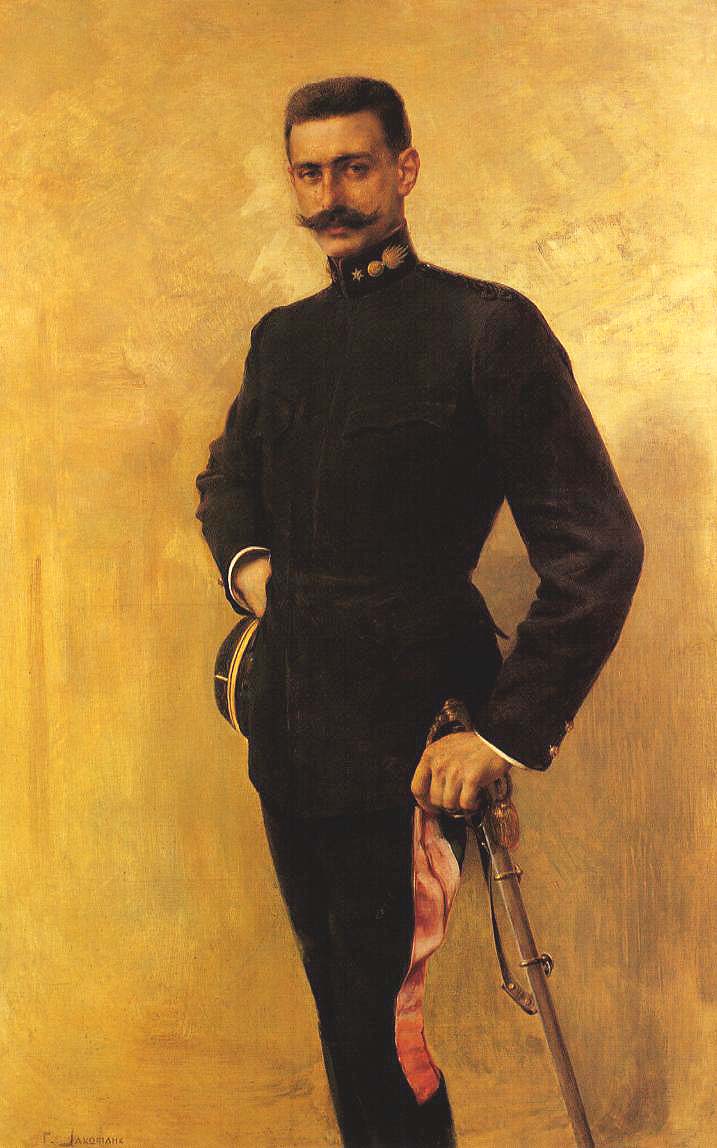
Pavlos Melas, an artillery officer, entered western Macedonia as "Mikis Zezas." On 13 October 1904 (Old Style), or 26 October (New Style), he was killed in Statista, the present-day village of Melas. His death sparked a major mobilisation in Greece and made him a central symbol of the Struggle. However, it was not the beginning of all Greek activity in the region, nor does it sum up the experiences of all the fighters and inhabitants.
From 1904 to 1908, Greek and Bulgarian armed bands, Ottoman forces, and local Serbian groups clashed in different zones. The goal of the Greek bands was primarily to maintain or bring communities back to the Patriarchist and Greek side and to limit Bulgarian armed influence. This was not an official war between Greece and Bulgaria, nor was it an operation of the Greek army on a unified front.
The violence also affected civilians. Murders of prominent figures, priests, and teachers, arson, threats, and coercion were used by opposing networks to change the stance of villages. Acknowledging the violence of all sides does not automatically equate their goals or responsibilities. It is, however, necessary to understand why many local choices were not free and definitive national declarations.
On the Greek side, officers from the Kingdom, Cretans, and other volunteers participated, as well as local Patriarchist chieftains, many of whom were Slavic-speakers. This linguistic reality does not allow us to mechanically identify language with national allegiance. Nor is it permissible to assume that every village followed one side unalterably throughout the course of the conflict.
In Crete, meanwhile, the disagreement had intensified between High Commissioner George and Eleftherios Venizelos, advisor for Justice until his dismissal in 1901. Venizelos called for more constitutional governance and believed that claiming Enosis immediately, without international preparation, might fail. The Prince relied on centralised powers and sought to handle the issue himself through the Courts and the Powers.
In Greece, the elections of 20 February 1905 gave victory to Diligiannis and parliamentary confirmation to the government he had formed the previous December.
On 10 March 1905 (Old Style), or 23 March (New Style), Venizelos, Konstantinos Foumis, and Konstantinos Manos declared an armed movement at Theriso. They demanded Enosis with Greece and, as an immediate step, more substantial liberties and a change in the regime. A revolutionary assembly and a parallel administration were formed. There were armed clashes and intervention by international forces, but the movement mainly resulted in negotiation.
On 31 May, Diligiannis was assassinated outside Parliament by Antonios Gerakaris, also known as Kostogerakaris, who was connected to illegal gambling clubs that the government had decided to close. No organised political conspiracy emerged from the available evidence. After a short period of deliberations, a government led by Dimitrios Rallis was formed in June. In December, Theotokis returned and remained at the head of the government until the end of the episode.
In Crete, the agreement of November 1905 ended the Theriso movement and provided for amnesty and the examination of reforms. Immediate Enosis was not achieved, but the path was opened for changes in the administration and the Constitution of the State.
The Greek elections of March 1906 gave Theotokis a stronger parliamentary base. His government increased military spending, strengthened the organisation of the army and navy, and continued to support the activity in Macedonia. Reorganisation was real but incomplete. Deficiencies in training, administration, and equipment remained, while the royal family maintained a strong presence in the military leadership.
In the spring of the same year, the international athletic games in Athens, the so-called Intercalated Games, showcased a different image of the country from that of the 1897 defeat. Today, the International Olympic Committee does not number them as a separate Olympiad. For contemporaries, however, the event was a significant public display of organisational capacity and national self-confidence.
In Crete, in 1906, the Powers accepted the reorganisation of the gendarmerie and the creation of a militia with Greek officers, as well as the gradual withdrawal of foreign troops. They did not, however, recognise Enosis. Prince George resigned, and in September, Alexandros Zaimis was appointed High Commissioner. The new Cretan Constitution limited certain centralising aspects of the previous regime. Venizelos emerged as a leading figure in Cretan politics, but he had not yet entered the political life of the Greek Kingdom.
In the autumn of 1906, the small "Group of the Japanese" appeared in Parliament, with deputies such as Stefanos Dragoumis and Dimitrios Gounaris. The nickname alluded to the impression created by a reformed Japan following its victory over Russia. The group denounced administrative inertia and called for renewal, but it disbanded when Gounaris entered the government in 1908 without implementing the entirety of its programme.
The 1907 census recorded a real population of approximately 2,632,000 inhabitants. The figure concerns those within the Greek territory and does not include the Greek communities of the Ottoman Empire or autonomous Crete. Despite the relative economic recovery after 1898, emigration increased and social inequalities remained acute.
Athens had about 175,000 inhabitants and Piraeus about 75,000. The development of the two cities was linked to the administration, trade, the port, and the first industrial concentrations. Greece remained primarily rural, but public debate was increasingly conducted in a capital where newspapers, the university, students, and political rallies could turn a linguistic or national dispute into a governmental crisis.
In the summer of 1908, the Young Turk Revolution restored the Ottoman Constitution and promised equality to the subjects of the Empire. The opposing armed bands in Macedonia suspended their activities or surrendered their weapons. The so-called Macedonian Struggle closed as an armed phase, not because the issue of national claims had been solved, but because the new political framework created temporary expectations of parliamentary coexistence.
Upheavals continued in the autumn: Bulgaria declared its independence, and Austria-Hungary annexed Bosnia and Herzegovina. In Crete, while High Commissioner Zaimis was off the island, the government of the Cretan State declared Enosis with Greece on 24 September (Old Style), or 7 October (New Style), and an inter-party executive authority was formed.
The declaration was not recognised internationally nor was it officially accepted by Athens. The Greek government feared war with the Ottoman Empire and complied with the stance of the Protecting Powers. At the end of 1908, Crete was administered in practice without a commissioner and with Greek state symbols, but its legal union with Greece had not yet been completed. This would happen in 1913.
The cautious stance of Athens caused new disappointment. The international recession of 1908 reduced exports and migrant remittances, while complaints accumulated in the army regarding promotions, equipment, and the influence of the princes. On 31 December 1908, Greece had regained part of its fiscal and military functionality, but it had not overcome the crisis of political credibility that had begun in 1897.
The decade left a complex imprint. Financial control was accompanied by stabilisation but also by a loss of autonomy. The Cretan State acquired institutions without yet uniting with Greece. In Macedonia, the Greek presence was strengthened, at the cost of violence that weighed mainly on local societies. And within the Kingdom, the demand for deeper reform remained open.
In the next episode, we move to the years 1909–1913: to the movement at Goudi, the rise of Eleftherios Venizelos, and the Balkan Wars that would radically change the borders of Greece.
Find all episodes at ProjectGreece.gr, along with references, additional material, explanations, sources, and bibliography.
All episodes of the series are available for free on Spotify, Apple Podcasts, and YouTube Music.
ProjectGreece.
So the story can continue.
Sources & bibliography
This episode is linked to 30 documentation and rights records.
- Βουλή των Ελλήνων, *Μητρώο Περιόδων Βουλευτών 1865–1910*, στήλες ΙΕ΄–ΙΗ΄: https://www.hellenicparliament.gr/userfiles/f3c70a23-7696-49db-9148-f24dce6a27c8/1822-1935.pdfOFFICIAL_LINK_ONLYOpen source
- Βουλή των Ελλήνων, Πρακτικά περιόδου 1901–1902, συνεδρία Ι΄, 21 Ιανουαρίου 1902: https://www.hellenicparliament.gr/UserFiles/f3c70a23-7696-49db-9148-f24dce6a27c8/%CE%A0%CE%A1%CE%92%20%CE%A0%CE%95%CE%A1.%CE%99%CE%95%20%CE%A3%CE%A5%CE%9D.%CE%93%201901-1902.pdfPD_TEXT / SCAN_LINK_ONLYOpen source
- Βεκίρης, Κωνσταντίνος, *Οι πολιτικές εξελίξεις και οι πολιτικές προσωπικότητες του 20ού αιώνα*, τ. Α΄, Ίδρυμα της Βουλής των Ελλήνων, printed pp.37–43: https://www.hellenicparliament.gr/UserFiles/8c3e9046-78fb-48f4-bd82-bbba28ca1ef5/BEKIRIS_VOL.%201_FINAL.pdfOFFICIAL_LINK_ONLYOpen source
- FRUS 1898, doc.1136, Treaty of Peace, arts II–III: https://history.state.gov/historicaldocuments/frus1898/d1136PUBLIC_DOMAIN_USGOVOpen source
- UK Treaty Series no.9 (1898), Convention for Greek guaranteed loan, Paris 29 March 1898, art.I: https://treaties.fcdo.gov.uk/data/Library2/pdf/1898-TS0009.pdfPD_TEXT / SCAN_LINK_ONLYOpen source
- Νόμος ΒΦΙΘ΄/1898, «Περί Διεθνούς Ελέγχου», ΦΕΚ Α΄ 28/1898.PD_TEXT / SCAN_LINK_ONLY
- Τράπεζα της Ελλάδος, *Κατάλογος Μόνιμης Έκθεσης*, ενότητα «Ο Διεθνής Οικονομικός Έλεγχος και οι προσπάθειες σταθεροποίησης της δραχμής»: https://www.bankofgreece.gr/Publications/museum-catalogue-permanent-exhibition.pdfOFFICIAL_LINK_ONLYOpen source
- ΙΜΕ, “Domestic Policy, 1897–1922,” facts: https://www.ime.gr/chronos/13/gr/domestic_policy/facts/index.htmlCITATION_ONLYOpen source
- ΙΜΕ, “Economy, 1897–1922,” public finances: https://www.ime.gr/chronos/13/gr/economy/institutions/05.htmlCITATION_ONLYOpen source
- ΙΜΕ, “The currant crisis”: https://www.ime.gr/chronos/13/gr/economy/facts/02.htmlCITATION_ONLYOpen source
- Panteion University repository, study with Appendix A “Κυβερνήτες της Ελλάδας 1897–1913,” pp.55–56: https://pandemos-api.panteion.gr/server/api/core/bitstreams/1624470f-0500-4b2f-9b9e-e6a1a5f93e45/contentCITATION_ONLYOpen source
- Βουλή των Ελλήνων, *Κρήτη: 90 χρόνια από την Ένωση*, printed pp.30–32, 70, 74, 77: https://www.hellenicparliament.gr/UserFiles/8c3e9046-78fb-48f4-bd82-bbba28ca1ef5/CRETE.pdfOFFICIAL_LINK_ONLYOpen source
- FRUS 1906, doc.667, Cretan Assembly and reply of the Protecting Powers: https://history.state.gov/historicaldocuments/frus1906p1/d667PUBLIC_DOMAIN_USGOVOpen source
- FRUS 1909, docs.301–304, retrospective statements on the Cretan status quo: https://history.state.gov/historicaldocuments/frus1909/d301 and https://history.state.gov/historicaldocuments/frus1909/d304PUBLIC_DOMAIN_USGOVOpen source
- ΙΜΕ, “Foreign Policy, 1897–1922 — Crete”: https://www.ime.gr/chronos/13/gr/foreign_policy/choros/02.htmlCITATION_ONLYOpen source
- ΓΑΚ, Ελληνική Αρχειακή Πύλη, Αρχείο Ελευθερίου Βενιζέλου, ενότητα εγγράφων Κρητικής Πολιτείας 1898–1906: https://greekarchivesinventory.gak.gr/index.php/informationobject/browse?media=print&names=49196&places=10201&sort=identifier&sortDir=desc&topLod=0&view=tableCITATION_ONLYOpen source
- Livanios, Dimitris. “‘Conquering the souls’: nationalism and Greek guerrilla warfare in Ottoman Macedonia, 1904–1908.” *Byzantine and Modern Greek Studies* 23 (1999), 195–221. DOI: https://doi.org/10.1179/byz.1999.23.1.195CITATION_ONLYOpen source
- Rodogno, Davide. “The European powers’ intervention in Macedonia, 1903–1908.” In *Humanitarian Intervention: A History* (Cambridge UP, 2011), pp.205–226. DOI: https://doi.org/10.1017/CBO9780511921292.009CITATION_ONLYOpen source
- FRUS 1903, doc.749, diplomatic report on destruction, displacement and uncertainty: https://history.state.gov/historicaldocuments/frus1903/d749PUBLIC_DOMAIN_USGOVOpen source
- FRUS 1903, doc.751, nine points of the Mürzsteg reforms and Ottoman reply: https://history.state.gov/historicaldocuments/frus1903/d751PUBLIC_DOMAIN_USGOVOpen source
- ΓΑΚ/Ιστορική και Εθνολογική Εταιρεία, Αρχείο Παύλου και Ναταλίας Μελά, Αρ.Εισ.176: https://greekarchivesinventory.gak.gr/index.php/wwxf-4cee-dx67CITATION_ONLYOpen source
- Υπουργείο Εξωτερικών, Διπλωματικό και Ιστορικό Αρχείο: https://www.mfa.gr/diplomatiko-kai-istoriko-archeio/OFFICIAL_LINK_ONLYOpen source
- Gounaris, Basil C. “Reassessing Ninety Years of Greek Historiography on the ‘Struggle for Macedonia’, 1904–1908.” In Mackridge and Yannakakis, eds., *Ourselves and Others* (Berg, 1997), pp.25–37.CITATION_ONLY
- Κέντρο Ελληνικής Γλώσσας, «Πολιτική, Γλώσσα και Κοινωνία 1870–1909»: https://www.greek-language.gr/digitalResources/literature/education/greek_history/item.html?iid=48CITATION_ONLYOpen source
- Κέντρο Ελληνικής Γλώσσας, «Ευαγγελικά»: https://www.greek-language.gr/greekLang/ancient_greek/education/translation/handbook_ideology/pop05.htmlCITATION_ONLYOpen source
- ΕΛΣΤΑΤ, *Απογραφές Πληθυσμού 1821–2021*, ενότητα Απογραφή 1907: https://www.statistics.gr/documents/20181/17202034/ELSTAT_APOGRAFES_1821_2021.pdfOFFICIAL_LINK_ONLYOpen source
- ΙΜΕ, “Society — Migration,” facts/03: https://www.ime.gr/chronos/13/gr/society/facts/03.htmlCITATION_ONLYOpen source
- ΕΡΤ Αρχείο, «Δολοφονία του Πρωθυπουργού Θεόδωρου Δηλιγιάννη — 31 Μαΐου 1905»: https://www.ert.gr/ert-arxeio/dolofonia-toy-prothypoyrgoy-theodoroy-diligianni-31-ma-oy-1905/CITATION_ONLYOpen source
- Mallon, Bill. *The 1906 Olympic Games: Results for All Competitors in All Events, with Commentary*. McFarland, 1999.CITATION_ONLY
- IOC Olympic Studies Centre, *The Process of Inclusion of Women in the Olympic Games*, p.8, n.18 (χαρακτηρίζει τους αγώνες του 1906 μη αναγνωρισμένους ως επίσημους από τη ΔΟΕ): https://library.olympics.com/digitalCollection/DigitalCollectionAttachmentDownloadHandler.ashx?documentId=160462&parentDocumentId=26494&skipCopyright=true&skipWatermark=trueCITATION_ONLYOpen source